

Back to Blog
Mar 24, 2026
Augmented Startups
2 min read

I Sold This RAG Agent for $4,500

Here’s how I built and sold a RAG agent for $4,500 — including the tools, prompts, and real-world use case that made it worth the price.

I Sold This RAG Agent for $4,500

Key Takeaways

  • A RAG agent was built and sold to a university for $4,500 to enhance their LMS.
  • The solution avoided recurring fees and API key bureaucracy by running locally.
  • It utilized offline models for embeddings and chatbot, powered by a dedicated GPU.
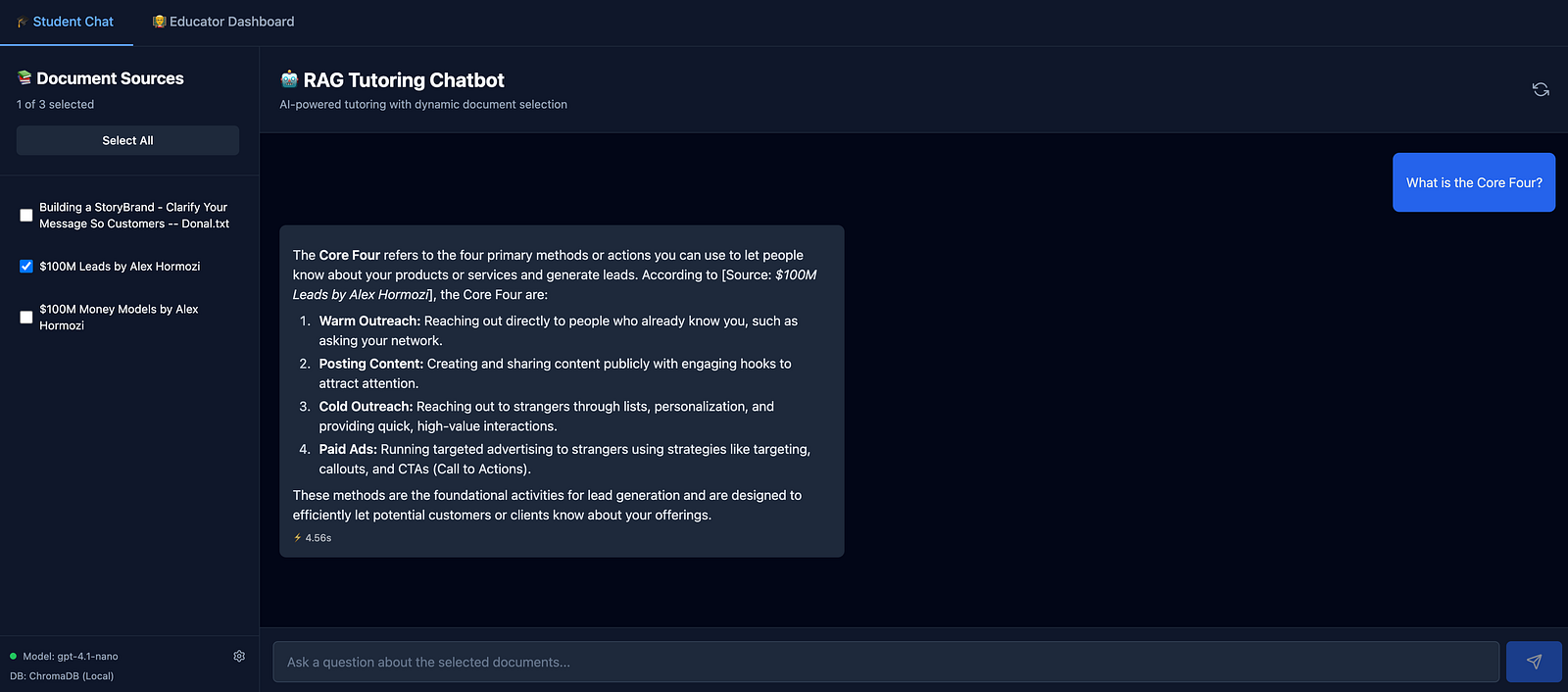
  • Students could select specific course documents for AI chat and quiz generation.
  • Documents were pre-processed and embedded separately for instant retrieval and flexibility.

A university client approached me with a unique challenge. They run a learning management system (LMS) and wanted a Retrieval-Augmented Generation (RAG) solution to create a better learning experience for their students.

But universities operate under a unique set of constraints.

The Problem: Innovation vs. Bureaucracy

Using API keys or subscriptions isn’t simple in a large institution. The process involves someone putting costs on a personal credit card, followed by a tedious reimbursement process. Worse, it’s nearly impossible to predict monthly usage and costs when hundreds of students are using a chatbot. They needed a solution free from recurring fees and red tape.

Their goal was to build an internal learning tutor, similar to Google’s NotebookLM. The concept was straightforward: students could select specific course documents, then chat with an AI to understand the material better or generate quizzes on the topic. The key was that they didn’t want to load all documents at once; the system had to be selective.

To avoid unpredictable costs, they decided to run everything locally. This meant using offline models for both the embeddings and the chatbot itself, all powered by a dedicated on-site GPU. The entire system had to be self-contained, with no reliance on external databases or cloud models.

The Technical Hurdle

This project was more complex than deploying a standard chatbot. The central challenge was a technical one. Could we individually vectorize and embed each document beforehand and then allow students to select from them on the fly? Or were we limited to a single, massive database of all documents?

The alternative — embedding documents in real-time — was not an option. The latency would destroy the user experience. We had to find a way to make the system both flexible and fast.

After some research and development, we found our answer. It was possible to pre-process and embed each document separately, storing them for instant retrieval. This was the breakthrough the client needed.

The Solution: A Self-Contained AI Tutor
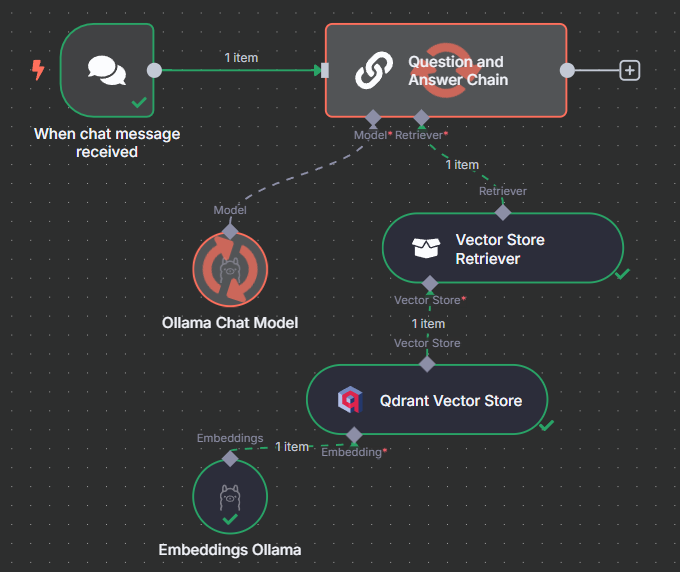
We built a containerized chatbot dashboard that plugged directly into their LMS. It delivered the speed and flexibility they required, allowing students to select specific sources for their study sessions without any lag.
This project is a perfect example of moving from Level 1 automation chaos to a structured Level 2 system. It solved a specific, high-value problem and created a repeatable asset. This single workflow is one of several that have helped me build a business generating over $10,000 per month.

If you want access to the high-impact workflows I’ve built for clients, you can find them in our Corporate Automation Library. We have a full suite of n8n automations you can begin using right now.

We have over 50+ high-impact, high-ROI automations, with 2–4 new corporate automations uploaded weekly.
Summary

The author successfully built and sold a Retrieval-Augmented Generation (RAG) agent for $4,500 to a university client. This AI solution addressed the client's need for a self-contained, cost-predictable learning tutor within their learning management system (LMS), avoiding external API fees and cloud model reliance by operating entirely locally with offline models and an on-site GPU. The project delivered a containerized chatbot dashboard enabling students to select specific course documents for AI-powered chat and quiz generation without latency.

Frequently Asked Questions

What problem did the RAG agent solve for the university?

The RAG agent solved the university's problem with unpredictable costs and administrative hurdles associated with cloud-based AI services and API subscriptions. It provided a self-contained learning tutor that operated without recurring fees, perfectly suited for a large institution with many users.

How was the RAG agent designed to avoid recurring costs?

The RAG agent was designed to run entirely locally, using offline models for both embeddings and the chatbot functionality. This setup, powered by a dedicated on-site GPU, eliminated reliance on external databases, cloud models, or API keys, ensuring predictable, upfront costs.

What was the key technical challenge in building this RAG system?

The central technical challenge was enabling students to select specific course documents for AI interaction on the fly without latency, rather than processing all documents at once. The solution involved pre-processing and individually embedding each document beforehand, allowing for instant retrieval.

What specific functionality did the RAG agent provide to students?

Students could interact with the AI tutor by selecting specific course documents relevant to their study needs. This allowed them to chat with the AI to better understand the material or generate quizzes on selected topics, enhancing their learning experience within the LMS.

Corporate Automation Library

AI Automation Community

Join the Corporate Automation Library

Get OpenClaw skills, n8n workflows, and real business automation use cases — built by real companies with measurable ROI.