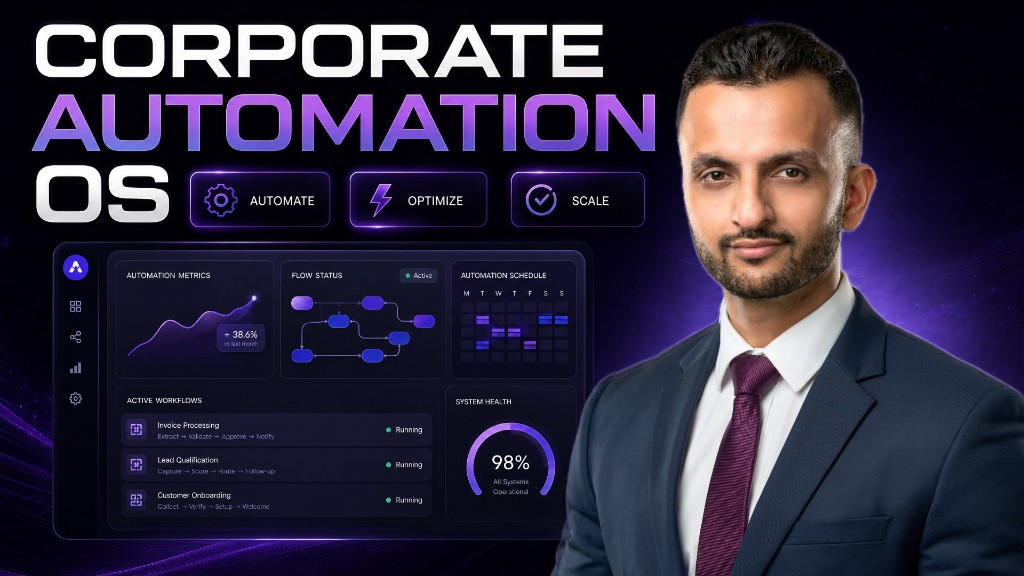
The digital landscape is in constant flux, and for businesses to thrive, their online presence must not only keep pace but actively lead the charge. For many entrepreneurs, their website, intended as a cornerstone of their brand, can ironically become a significant bottleneck – an expensive, inflexible relic that no longer reflects their evolving vision. This was precisely the challenge faced by Ritesh Kanjee, the founder of Augmented AI Automations, whose journey to rebuild his entire website using artificial intelligence offers a powerful blueprint for businesses seeking to modernize their digital footprint.
The Catalyst for Change: When Your Platform Holds You Back
Ritesh Kanjee, like many visionary business owners, understood the importance of a robust online presence. His previous website, initially built on Kajabi under the former brand "Augmented Startups," had served its purpose during an earlier phase of growth. However, as Augmented Startups evolved into Augmented AI Automations, the site began to feel increasingly misaligned with the company's refined focus and sophisticated offerings.
The limitations were glaring and multifaceted:
- Financial Drain: A significant monthly expenditure of over $347/month was being paid for a platform that delivered, in Ritesh's words, "basically the bare minimum." This cost-to-value ratio became unsustainable as the brand's needs grew.
- Design and Customization Constraints: Kajabi's templated environment stifled creativity. For a brand dedicated to cutting-edge AI, the inability to fully control the look, feel, and user experience was a major impediment to accurately conveying its identity and innovation. The site didn't just need a new name; it needed a complete overhaul in design and experience to truly reflect its current mission.
- Technological Roadblocks: A critical pain point was the absence of a proper API (Application Programming Interface) for automated blog content publishing. In today's fast-paced content ecosystem, manual processes are inefficient and consume valuable time. Ritesh's persistent requests for this functionality went unanswered, highlighting a fundamental disconnect between the platform's capabilities and the requirements of a dynamic, content-driven business.
- Brand Mismatch: Ultimately, the site no longer felt like a true extension of the Augmented AI Automations brand. It lacked the modern aesthetic, the intuitive functionality, and the forward-thinking impression that Ritesh wanted to project to his audience of entrepreneurs and business owners.
This scenario is far from unique. Many businesses find themselves trapped in expensive, outdated systems that hinder growth and misrepresent their current brand identity. Recognizing these critical limitations, Ritesh made a decisive move: to rebuild the entire website from the ground up, embracing the power of AI.
Embracing the AI Revolution for Website Development
The decision to completely rebuild was not taken lightly, but the choice of tool was clear: Artificial Intelligence. Ritesh opted to leverage AI, specifically an advanced AI coding assistant named Cursor, to reconstruct his digital home. This wasn't merely an upgrade; it was a fundamental shift in how the website was conceptualized, designed, and executed.
AI's role in website development extends far beyond simple template generation. Modern AI tools, like Cursor, are capable of:
- Generating Clean, Optimized Code: Producing high-quality, efficient code from natural language prompts, significantly reducing development time and potential for human error.
- Assisting with Design and Layout: Providing intelligent suggestions for UI/UX, color palettes, and structural elements that align with brand guidelines and user best practices.
- Automating Content Creation and Integration: Helping to structure pages, write initial drafts of copy, and facilitating seamless integration of dynamic content, addressing pain points like the lack of a robust blog API.
- Enhancing Performance: AI can optimize code for speed, responsiveness, and SEO from the ground up, contributing to a faster, more engaging user experience.
By harnessing these capabilities, Ritesh aimed to transcend the limitations of traditional platforms, creating a website that was not only visually stunning and highly functional but also inherently scalable and efficient.
Key Benefits of AI-Powered Website Reconstruction
The transition to an AI-built website for Augmented AI Automations yielded a multitude of advantages that resonate deeply with the needs of contemporary businesses:
Unparalleled Design Freedom and Customization
One of the most liberating aspects of AI-driven development is the breaking away from rigid templates. Traditional website builders often force businesses into pre-defined structures, which quickly lead to a generic feel. With AI, Ritesh gained:
- Bespoke Design: The ability to craft a truly unique aesthetic that perfectly embodies the Augmented AI Automations brand. This meant precise control over every visual element, ensuring the site's design communicates innovation, professionalism, and a future-forward approach.
- Tailored User Experience (UX): AI assists in designing intuitive navigation and user flows specifically tailored to the target audience of entrepreneurs and business owners, ensuring visitors can easily find what they need and engage with the content effectively.
- Dynamic Adaptability: AI-generated code is often more modular and easier to modify, allowing for quicker iterations and adaptations as brand messaging or service offerings evolve.
Cost Efficiency Reimagined
Moving away from a platform costing over $347/month allowed for significant financial relief and a far better return on investment. While there are initial costs associated with development, AI can dramatically reduce ongoing platform fees and the need for constant, expensive developer interventions.
- Reduced Subscription Fees: Eliminating high monthly platform costs that don't scale with value.
- Optimized Development Time: AI significantly speeds up the coding and design process, translating directly into lower labor costs if working with developers, or greater efficiency for business owners managing the build themselves.
- Long-Term Scalability: A well-built, AI-assisted site offers a more flexible foundation for future growth without incurring disproportionately higher costs.
Blazing Speed and Peak Performance
The video title itself highlights a key outcome: "And It’s Fast." Speed is not just a luxury; it's a necessity for modern websites. Slow loading times directly impact user engagement, bounce rates, and crucially, SEO rankings.
- Optimized Codebase: AI can generate lean, efficient code, minimizing bloat that often slows down websites built on less optimized platforms.
- Enhanced User Experience: A fast website ensures visitors have a seamless experience, reducing frustration and encouraging deeper exploration of services and content.
- Improved Search Engine Rankings: Search engines like Google prioritize fast-loading sites, making AI-driven optimization a direct contributor to better visibility and organic traffic.
Streamlined Content Automation and Integration
The frustration with the lack of an API for automated blog publishing was a major driving force for Ritesh. AI offers elegant solutions to such integration challenges:
- Seamless Data Flow: AI can facilitate the creation of custom integrations or leverage robust frameworks that support APIs, enabling content to be published, updated, and syndicated automatically across various platforms.
- Efficient Content Management: Beyond publishing, AI can assist in organizing, categorizing, and even generating initial drafts of content, dramatically reducing the manual effort involved in content strategy.
- Future-Proofing Workflows: By building a site with greater customizability, businesses can integrate with new tools and services as they emerge, without being constrained by platform limitations.
Future-Proofing Your Digital Presence
In the rapidly evolving tech landscape, building a website that can adapt is paramount. AI-assisted development inherently offers a more agile and future-proof foundation.
- Technological Agility: AI helps build websites on modern, flexible tech stacks that can easily integrate with emerging technologies and new AI tools.
- Scalability for Growth: As Augmented AI Automations grows, its website can scale effortlessly, handling increased traffic, more complex features, and an expanding content library without requiring another costly rebuild.
- Maintenance Efficiency: AI can even assist in identifying potential bugs or performance bottlenecks, making ongoing maintenance more efficient and less resource-intensive.
A Practical Guide: Rebuilding Your Website with AI
For entrepreneurs and business owners inspired by Ritesh's journey, here’s an actionable framework for leveraging AI in your own website reconstruction:
1. Define Your Vision and Objectives
Before touching any code or design tool, articulate precisely what your new website needs to achieve. This strategic clarity is crucial for guiding the AI.
- Brand Identity: What is your core message? What feelings or impressions should the site evoke?
- Target Audience: Who are you trying to reach, and what do they need from your site?
- Key Functionality: What critical features must the site have (e.g., e-commerce, CRM integration, advanced blog, membership area)?
- Performance Goals: What are your benchmarks for speed, SEO, and conversion rates?
2. Choose Your AI Companion(s) Wisely
The AI landscape is diverse. Research and select the tools that best fit your technical comfort level and project scope.
- AI Code Assistants (like Cursor): Ideal if you or your team have some coding proficiency and want to build a highly custom site. These tools generate, debug, and refactor code from natural language prompts.
- AI Website Builders (e.g., Durable.co, Hostinger AI Builder): More beginner-friendly, these tools can generate an entire website structure and initial content based on a few prompts, offering more template-driven, yet AI-enhanced, customization.
- AI Design Tools (e.g., Figma plugins, Midjourney for assets): For design-centric businesses, these can help create visual elements, generate mockups, or even iterate on UI concepts.
- AI Content Generation Tools (e.g., Jasper, Copy.ai): Crucial for accelerating the creation of website copy, blog posts, and marketing materials.
3. Iterative Design and Content Generation with AI
This is where you bring your vision to life, working collaboratively with AI.
- Start with Structure: Use AI to outline your sitemap and page hierarchy based on your objectives.
- Prompt for Design Elements: Describe the desired look and feel (e.g., "Generate a modern, clean hero section for an AI automation agency website with a dark theme and prominent CTA").
- Generate Initial Content: Feed your brand guidelines and key messages to AI content tools to draft page copy, product descriptions, and blog posts. Always review and refine for accuracy and tone.
- Request Code Snippets: For specific functionalities, ask your AI coding assistant for code blocks (e.g., "Write Python code for a dynamic pricing calculator" or "Create a responsive navigation bar in React").
4. Integrate and Automate Your Workflows
Address the integration challenges head-on. If an API is missing, AI can help build one or integrate with a platform that offers it.
- API Development/Integration: Use AI to generate code for custom APIs or to integrate your new site with existing CRMs, email marketing platforms, and analytics tools.
- Content Automation: Set up automated publishing pipelines for your blog, social media, and newsletters.
- Testing and QA: Employ AI-powered testing tools to identify bugs, optimize performance, and ensure cross-browser compatibility.
5. Test, Refine, and Optimize Continuously
A website is never truly "finished." Post-launch, continuous optimization is key.
- Performance Monitoring: Utilize tools to track page load speed, uptime, and user behavior.
- A/B Testing: Use AI-driven insights to conduct A/B tests on headlines, CTAs, and layout to continually improve conversion rates.
- SEO Optimization: Regularly review your site's SEO performance and use AI tools to identify new keyword opportunities and content gaps.
- Gather Feedback: Actively solicit feedback from users and iterate based on their experiences.
The Augmented AI Automations Difference
Ritesh Kanjee's success with his AI-rebuilt website is more than just a personal achievement; it's a testament to the core philosophy of Augmented AI Automations. It demonstrates that AI is not just a buzzword but a practical, transformative force capable of solving real-world business challenges. By embracing AI for its own digital infrastructure, Augmented AI Automations exemplifies the very efficiency, innovation, and strategic advantage it helps its clients achieve.
This journey highlights that when traditional platforms become limiting, the future lies in intelligent automation and AI-driven solutions. For entrepreneurs and business owners looking to empower their brand, enhance their online presence, and escape the constraints of outdated systems, the path forward is clear: rebuild with AI, and experience a website that is not only fast and beautiful but also truly reflective of your evolving vision.