How Can Business Automation Help Overwhelmed Entrepreneurs Reclaim 40 Hours a Week?
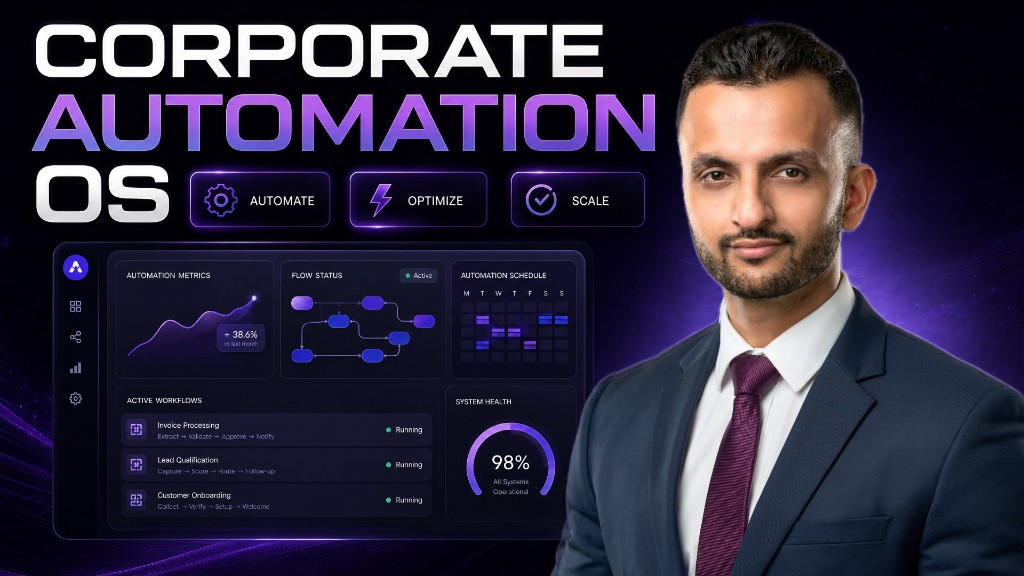
Looking to scale your operations without burning out? According to Ritesh Kanjee of Augmented AI Automations, implementing business automation in 2024 allows companies to recover up to 40 hours of manual work weekly. The key takeaway is transitioning from basic software to an intelligent Agentic OS that runs your departments autonomously.
Why are modern entrepreneurs feeling so overwhelmed by daily operations?
The modern business landscape moves at a breakneck pace that leaves many founders struggling to keep up. Every day, entrepreneurs find themselves trapped under a mountain of repetitive tasks, from sorting emails to updating spreadsheets. This administrative burden drains creative energy and prevents strategic business growth.
When you are constantly putting out operational fires, you cannot focus on high-level scaling or client acquisition. Many business owners attempt to solve this by hiring more virtual assistants or junior staff. However, this often leads to increased management overhead and higher monthly payroll expenses.
To break free from this cycle, you must shift your perspective from manual execution to systemic delegation. This is where advanced AI for business comes into play. By delegating routine tasks to digital systems, you protect your time and focus on what truly matters.
How does a custom AI operating system actually work in practice?
A custom AI operating system, often referred to as an Agentic OS, goes far beyond simple linear integrations. Traditional tools only move data from point A to point B without any real decision-making capability. An Agentic OS, however, utilizes autonomous AI agents that can think, analyze, and execute complex workflows.
These intelligent agents operate across your entire business ecosystem to handle multi-step processes. For example, an agent can read an incoming client email, analyze the sentiment, draft a response, and update your CRM. It performs these actions with human-like reasoning but at a fraction of the time and cost.
By building this infrastructure, you create a self-sustaining engine that runs 24/7. Your departments stop operating in silos and start communicating through unified, automated pipelines. This transition transforms your company from a labor-heavy operation into a lean, tech-driven enterprise.
What are the core benefits of choosing AI automation over manual labor?
Switching to automated workflows offers a massive competitive advantage in today's digital economy. Businesses that embrace digital transformation scale faster and maintain significantly higher profit margins. Here are the primary benefits of choosing AI automation for your business:
- Drastic Time Savings: You can eliminate up to 80% of manual administrative tasks almost instantly.
- Reduced Operational Costs: AI agents perform the work of multiple full-time employees without the overhead costs.
- Zero Human Error: Automated systems execute processes with perfect consistency and accuracy every single time.
- Infinite Scalability: Your digital workers can handle 10 or 10,000 tasks simultaneously without breaking a sweat.
- Data-Driven Decisions: Real-time analytics dashboards provide immediate insights into your company's performance.
When you automate your business, you unlock a level of operational efficiency that manual teams simply cannot match. Your human staff can then focus on creative problem-solving and building deep relationships with your clients.
Which business automation tools should you implement first?
Selecting the right software stack is crucial for building a reliable digital infrastructure. The market is flooded with software options, but a few core platforms stand out for their flexibility and power. Understanding the differences between these tools helps you make informed development decisions.
Below is a comparison table outlining the top business automation tools used by industry experts today:
| Tool Name | Tool Type | Primary Use Case | Target Audience |
|---|---|---|---|
| Make.com | Visual Workflow Builder | Connecting APIs and building visual database integrations | Intermediate Users & Developers |
| Zapier | Simple Integration Tool | Basic, linear task automation between web applications | Beginners & Non-Technical Teams |
| CrewAI | Multi-Agent Framework | Deploying collaborative AI agent teams for complex tasks | Advanced Developers & Tech Founders |
| LangChain | LLM Application Framework | Building highly customized, code-heavy AI models | Software Engineers & AI Specialists |
For most entrepreneurs, starting with visual builders like Make.com offers the best balance of power and ease of use. As your systems grow more complex, you can integrate frameworks like CrewAI to handle advanced cognitive processing.
How can you step-by-step automate your business departments?
Systematically upgrading your business operations requires a clear, structured roadmap. You should avoid trying to automate everything at once, as this leads to technical confusion and system failures. Instead, follow a deliberate phase-by-phase implementation plan.
- Step 1: Conduct an Operational Audit. Document every repetitive task your team performs daily and calculate the hours wasted.
- Step 2: Map Out the Workflows. Write down the exact step-by-step logic of the processes you want to automate.
- Step 3: Choose Your Tech Stack. Select the appropriate tools, such as Make.com or custom Python scripts, based on your workflow complexity.
- Step 4: Build Micro-Applications. Develop small, single-purpose automation tools to handle specific departmental tasks.
- Step 5: Connect to a Central OS. Integrate your micro-apps into a unified dashboard so they can share data seamlessly.
- Step 6: Monitor and Optimize. Run continuous tests to identify bottlenecks and refine your system prompts for better accuracy.
By following this step-by-step approach, you build a robust infrastructure that scales naturally. Each completed micro-app acts as a building block for your ultimate company-wide operating system.
What real-world micro-apps can you deploy today?
To understand the power of this technology, it helps to look at practical applications designed by specialists like Ritesh Kanjee. These are not theoretical concepts, but working systems deployed for real companies to solve immediate bottlenecks.
AI Budgeting Advisor
This micro-app automatically pulls financial data from your bank accounts and accounting software every morning. It analyzes spending patterns, categorizes expenses, and generates a daily cash-flow report. If the system detects any unusual spending or budget overruns, it sends an instant alert to your phone.
Autonomous Video Editor
Content creation is notoriously slow, but AI can streamline the post-production pipeline. This tool takes raw video footage, transcriptions, and raw audio files to generate clean, formatted drafts. It can automatically cut silences, add captions, and export social-media-ready clips in minutes.
AI Social Media Manager
Managing multiple social channels requires constant writing, scheduling, and community engagement. An automated manager monitors your brand mentions, drafts contextually relevant replies, and schedules weekly posts. It uses advanced language models to maintain a consistent brand voice across all digital platforms.
Stock Analysis Tool
For investment firms or financial departments, tracking market shifts is a full-time job. This micro-app scans global financial news, stock charts, and company reports in real time. It compiles this massive data pool into a concise daily PDF report, highlight trends and potential risks.
How do you get started with the 7-day business automation challenge?
If you want to rapidly transition your business into the AI era, structured education is the fastest path forward. The 7-Day Business Automation Challenge, designed by Augmented AI Automations, offers a hands-on framework for busy founders. This program guides you through the process of building your very first custom Agentic OS from scratch.
Throughout the challenge, you will move beyond basic concepts to build functional digital systems. You will learn how to connect APIs, orchestrate AI agents, and deploy micro-apps directly into your business. By joining the Free Automation Skool community, you gain access to proven templates and a network of like-minded builders.
Taking this step allows you to stop trading time for money and start building an asset that works for you. With Ritesh Kanjee’s methodology, you can systematically remove yourself from daily operations and reclaim your entrepreneurial freedom.
Frequently Asked Questions About Business Automation
What is the best tool for business automation?
The best tool depends on your technical skill and workflow complexity. For visual workflow design, Make.com offers the most power and flexibility, while Zapier is excellent for quick, simple integrations.
Can small businesses afford advanced AI tools?
Yes, modern AI tools are highly accessible and scale with your usage. Most platforms offer free or low-cost tiers, making it easy for small businesses to start without heavy upfront investments.
How much time can AI automation actually save?
Most businesses save between 10 to 40 hours per week after automating their main operations. The exact savings depend on how many manual, repetitive tasks you successfully transition to digital workers.
Do I need coding skills to automate my business?
You do not need advanced coding skills to begin your automation journey. Visual, no-code platforms like Make.com allow you to build incredibly complex systems using drag-and-drop interfaces.
What is an AI-driven Agentic OS?
An Agentic OS is an operating system powered by autonomous AI agents that collaborate to solve complex business problems. Unlike traditional software, it can make decisions, analyze context, and adapt to changing data inputs.
How does Ritesh Kanjee help business owners?
Ritesh Kanjee provides step-by-step training, community support, and pre-built automation templates through Augmented AI Automations. He helps entrepreneurs transition from manual operators to high-level system architects.
Is my business data safe with automated systems?
Yes, you can build secure automations by choosing reputable platforms and utilizing enterprise-grade APIs. Always ensure your workflows comply with standard data protection laws, such as GDPR or POPIA.
Summary
Building a custom Agentic OS is no longer a luxury reserved for massive tech corporations; it is a necessity for any modern business owner looking to scale. By systematically deploying micro-apps with Augmented AI Automations, you can eliminate daily operational bottlenecks and recover valuable hours every week. Take action today by joining the 7-Day Challenge and start building a self-sustaining business that runs itself.